
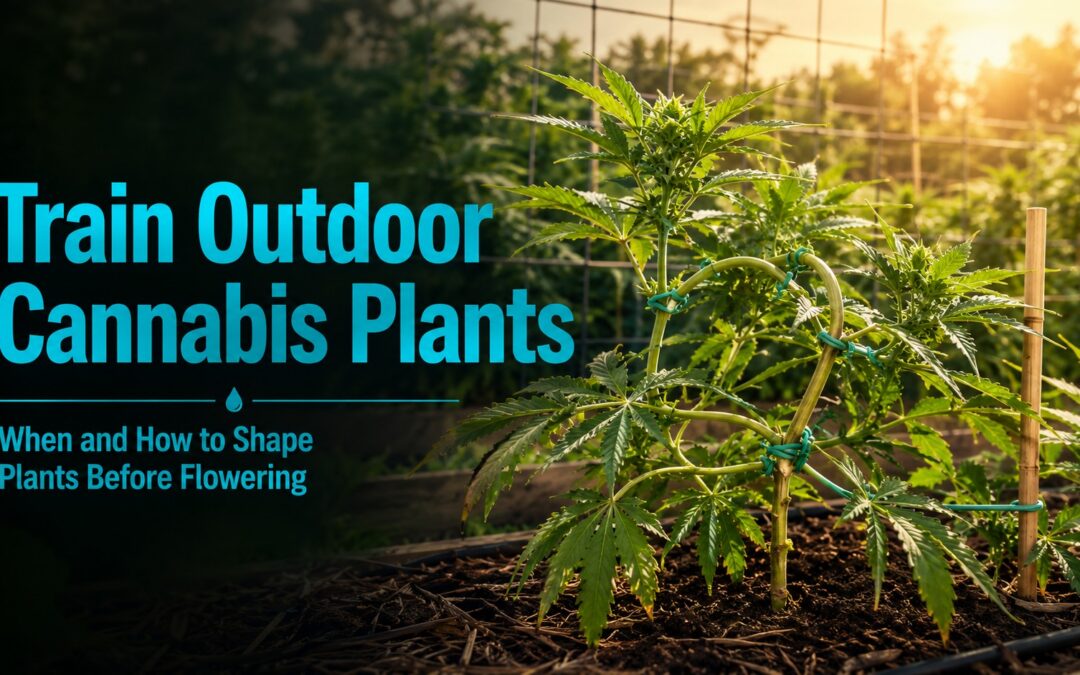
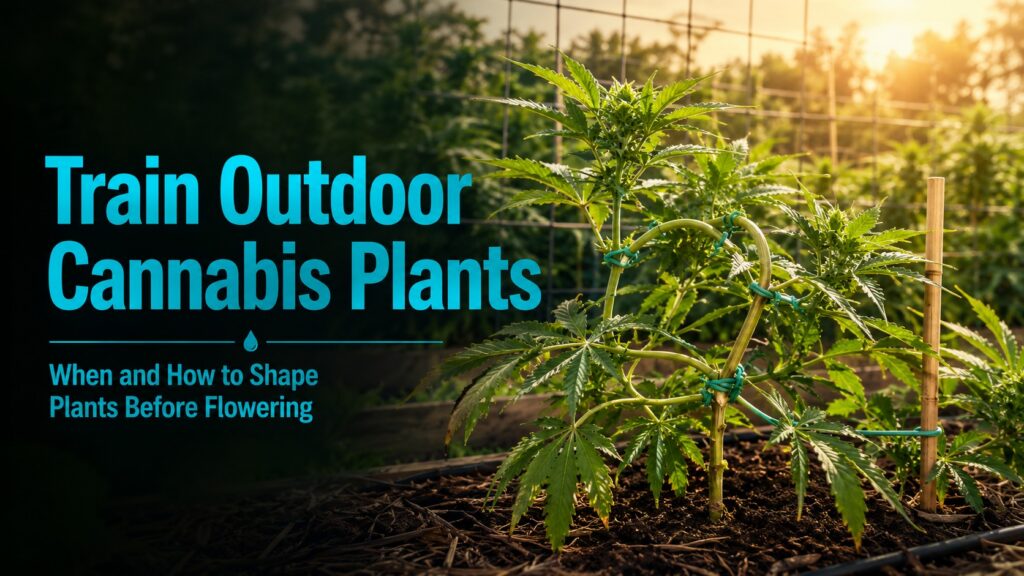
July is when outdoor cannabis plants start getting serious. Photoperiod plants are usually still building structure, pushing branches, and getting ready for the stretch into flower. That makes this one of the best windows to train outdoor cannabis plants before the season shifts from shaping growth to supporting flower.
Good training is not about forcing a plant into a perfect shape. It is about opening the canopy, improving airflow, guiding branches, and giving future flower sites better access to light. Done at the right time, training can help create a stronger outdoor plant before heavy buds, wind, rain, and late-season pest pressure become bigger problems.
The key is knowing when to train, when to wait, and when to stop. A healthy outdoor plant can handle shaping. A heat-stressed, thirsty, pest-damaged, or stalled plant needs stability first.
The Outdoor Cannabis Training Window: Why Timing Matters
Outdoor training works best when the plant is still actively growing and has enough time to recover before flower. For many outdoor growers, July is that middle zone. Plants are no longer tiny, but they are not fully committed to flower yet.
That timing matters. Train too early, and the plant may not have enough structure to work with. Train too late, and you can slow momentum right when the plant is shifting into flower.
Late Veg Is the Best Time to Shape the Plant
Late vegetative growth gives growers more to work with. Branches are longer, stems are stronger, and the plant is usually growing fast enough to recover from bending, topping, or light pruning.
This is when you can start correcting structure before the plant gets too tall, too dense, or too hard to manage. A little work now can make the plant easier to inspect, easier to support, and less crowded later.
Good late-veg training can help:
- Open the center of the plant
- Spread branches for better light exposure
- Reduce crowded interior growth
- Improve airflow through the canopy
- Build a stronger branch structure before flower
- Keep plant height more manageable
Outdoor plants do not need to look perfectly symmetrical. They need to be healthy, accessible, and set up to carry flower weight.
Pre-Flower Is When You Start Backing Off
As the plant moves toward flowering, the goal changes. Instead of pushing new structure, you start protecting what is already there.
Pre-flower is when growers should begin shifting from aggressive training to support work. That means adjusting ties, adding stakes or cages, cleaning up obvious weak growth, and keeping airflow open without stripping the plant too hard.
Once the stretch starts, branches can still be guided, but heavy topping, hard bending, and major pruning should usually be behind you.
Make Sure the Plant Is Ready Before You Train
Before you bend, top, prune, or tie anything down, look at the plant. Outdoor training only works well when the plant has enough health and momentum to respond.
A stressed plant does not need more stress. It needs recovery.
Signs a Cannabis Plant Is Ready for Training
A plant that is ready for training usually looks active and steady. The leaves are upright, new growth is forming, and branches are flexible enough to move without snapping.
Good signs include:
- Steady new growth
- Healthy green color
- Upright leaf posture
- Flexible branches
- Strong main stem
- Normal dry-back between waterings
- No major pest damage
- No obvious nutrient burn or lockout
You do not need a perfect plant. You just need a plant that is actively growing and not already fighting a bigger problem.
Signs You Should Wait
Hold off on training if the plant is wilting, stalled, brittle, pest-damaged, or recovering from recent stress. Training at the wrong time can slow growth and create damage that the plant must spend energy repairing.
Wait if the plant is:
- Drooping from heat or watering problems
- Recovering from transplant shock
- Showing pest pressure
- Nutrient burned
- Too dry or brittle
- Sitting in wet soil and stalled
- Already stressed from recent topping or pruning
This matters even more during July heat. If your plants are struggling in high temperatures, deal with the stress first. Mosca’s guide to cannabis heat stress during a heat wave can help you decide whether the plant is ready for training or needs a few days of recovery.
Low-Stress Training Outdoor Cannabis Plants
Low-stress training, or LST, is one of the most useful outdoor training methods because it shapes the plant without removing the top or forcing a major recovery period. For outdoor growers, it is especially helpful when plants are healthy but getting too vertical or crowded.
What Low-Stress Training Does
Low-stress training gently bends and secures branches so the plant grows wider and more open, rather than stacking into a single dense center. This lets more light reach lower branches and helps airflow move through the plant.
That is useful outdoors because dense plants can become harder to inspect later in the season. Crowded interiors can hold humidity, hide pests, and make support harder once flower weight shows up.
LST can help create:
- A wider canopy
- Better branch spacing
- More even light exposure
- Easier pest inspections
- Better airflow
- Less crowding before flower
The goal is not to flatten the plant completely. It is to open it up and guide growth in a way that the plant can handle.
How to Bend Without Breaking Branches
Train during the cooler part of the day when the plant is hydrated but not waterlogged. Branches are usually more flexible when the plant is not dry and brittle.
Move slowly. Bend a little, hold the branch, and feel the resistance it offers. If it feels like it wants to snap, stop. You can always come back later and adjust again.
Use soft ties, garden wire with a coating, plant clips, or flexible material that will not cut into the stem. Avoid thin wire, fishing line, or anything that can dig in as the branch grows.
When tying branches down, leave room for movement and expansion. Outdoor plants keep growing, and a tie that looks fine today can choke a branch later. Check ties every few days and loosen them as needed.
Outdoor LST Mistakes to Avoid
Most LST problems come from rushing. Growers pull branches too far, train during peak heat, forget ties, or keep bending a plant that is already stressed.
Avoid these common mistakes:
- Training in the hottest part of the day
- Pulling branches too far at once
- Tying too tightly
- Forgetting to adjust ties
- Training weak or pest-damaged branches
- Creating a canopy so flat and dense that airflow gets worse
Low-stress training should actually be low stress. If the plant looks worse for days afterward, the work was probably too aggressive or poorly timed.
Topping Outdoor Cannabis Before Flowering
Topping can be useful outdoors, but it needs more timing and judgment than LST. When you top a plant, you remove the main growing tip, prompting the plant to redirect growth into side branches.
That can help create a wider structure, but it also creates a recovery period. Outdoors, that recovery window matters.
When Topping Makes Sense
Topping makes the most sense when a photoperiod plant is healthy, actively growing, and still has enough vegetative time left to bounce back.
It can be useful when the plant is getting too tall, the grower wants a wider canopy, or the structure needs more branching before flower. It also works best when the weather is stable and the plant is not dealing with heat stress, drought stress, pest pressure, or nutrient problems.
Good timing usually means:
- The plant has several healthy nodes
- Growth is active
- Branches are forming well
- The plant has time to recover
- Outdoor conditions are not extreme
- The grower wants a wider, more controlled structure
Topping is not required for every plant. Some genetics naturally branch well. Some plants respond better to bending and support than to cutting.
For growers who want a more structured approach than basic topping, mainlining cannabis is another training method worth understanding. Also called manifolding, mainlining uses early topping and tie-downs to build a more even branch structure with multiple uniform colas. It is not something to start once a plant is moving into flower, but it can be a useful technique for healthy photoperiod plants that still have enough veg time to recover.
When Is It Too Late to Top Cannabis Plants?
Topping too late can slow the plant at the wrong time. If pre-flowers are clearly showing, stretch is beginning, or flower sites are forming, the plant is already shifting priorities.
At that point, heavy topping can interrupt momentum. Instead of pushing the plant to rebuild its structure, focus on support, airflow, and gentle branch positioning.
A simple rule: if the plant is moving into flower, stop trying to redesign it.
Autoflowers Need a Lighter Touch
Autoflowers are different because they do not wait for a seasonal change in light before entering the flowering stage. Their clock is already running, which means recovery time is limited.
Heavy topping or late, aggressive training can cost the plant growth it may not have time to replace. Many autoflower growers stick with gentle early LST and avoid major stress once the plant is moving fast.
If you are deciding how hard to train based on plant type, Mosca’s guide to autoflower vs. photoperiod cannabis is a useful refresher.
Pruning and Cleaning Up Growth Before Flower
Pruning before flower should have a purpose. Outdoor plants do not need to be stripped bare, nor do they need to look like indoor plants under perfect lighting.
The goal is clean structure, better airflow, and fewer weak areas that waste energy or hide problems.
What to Remove Before Flower
Before flower, it can make sense to remove dead or damaged leaves, lower growth that is touching the soil, weak interior shoots, and small branches that will never reach decent light.
This cleanup helps the plant breathe and makes inspection easier. It also keeps the base of the plant cleaner, which matters outdoors where rain, pests, soil splash, and debris are part of the environment.
Good candidates for removal include:
- Dead leaves
- Damaged leaves
- Lower growth touching soil
- Weak shaded interior shoots
- Crowded growth blocking airflow
- Small branches that cannot support flower weight
Take your time. A little cleanup can help. A hard strip during summer stress can backfire.
What to Leave Alone
Do not remove leaves just because they are large or because the plant looks “too leafy.” Outdoor plants use leaves to make energy, shade the plant, buffer stress, and support growth.
During summer heat, leaves can also protect branches and the root-zone area from harsh sun. Removing too much leaf at once can expose the plant and slow recovery.
If a leaf is healthy and doing its job, it does not always need to go.
Airflow Matters More Than a Perfect-Looking Plant
A good outdoor plant does not have to look manicured. It needs enough spacing that air can move and the grower can inspect it.
Better airflow can help reduce stagnant pockets inside the canopy and make it easier to catch pest or disease issues early. Mosca’s Integrated Pest Management Guide is a good follow-up for growers who want a stronger inspection and prevention routine before flower.
Build Support Before Stretch and Flower Weight
Outdoor plants deal with wind, rain, branch weight, and real weather. Training is not only about shape. It is also about support.
The best time to support a plant is before it desperately needs it.
Why Outdoor Plants Need Support Early
Once flower develops, branches get heavier and less flexible. A branch that seemed strong in veg can start leaning hard after rain, wind, or heavy bud growth.
Waiting too long makes support harder. You end up trying to tie up heavy branches without breaking them or blocking airflow. Early support gives the plant structure before the weight shows up.
Stakes, Cages, Trellis, and Soft Ties
Outdoor support does not need to be complicated. What works depends on plant size, container size, grow style, and how exposed the plant is.
Common support options include:
- Bamboo stakes
- Tomato cages
- Plant cages
- Soft garden ties
- Trellis netting
- Branch clips
- Plant yo-yos where appropriate
For smaller plants, a few stakes and soft ties may be enough. For larger outdoor plants, cages or trellis support can make inspections, airflow, and branch management easier.
Support the Plant Without Locking It Down
Outdoor cannabis plants still need some natural movement. A little movement helps strengthen stems. Support should guide and stabilize the plant, not trap it so tightly that stems rub, branches kink, or airflow gets blocked.
Check support points regularly. Branches thicken fast in summer, and ties that were loose last week can become tight before you notice.
Training During Heat, Drought, or Pest Pressure
Outdoor growers do not get perfect conditions all summer. Heat waves, dry spells, storms, pests, and nutrient issues can all change the training plan.
A good grower adjusts.
Heat-Stressed Plants Need Stability First
Do not train hard when the plant is wilting in peak heat, tacoing badly, or showing clear signs of stress. Bending, topping, and pruning all require energy for recovery.
If the plant is fighting heat, give it water when the root zone is dry, protect it from peak sun if needed, and wait until it is standing up and growing again before doing structural work.
Watering Problems Make Training Riskier
A dry plant is more brittle. An overwatered plant may be stalled and slow to recover. Either way, watering problems make training more risky.
Before training, make sure the root zone is behaving normally. The plant should be drinking, drying down, and standing up with a regular rhythm. Mosca’s guide to watering outdoor cannabis plants in summer heat can help growers sort out watering before they start bending or pruning.
Don’t Train Through Pest Problems
If pests are active, training can make inspection harder or spread issues around the plant. It can also distract from the real priority: getting the pest pressure under control.
Inspect first. Treat the real problem. Train later when the plant is stable.
When to Stop Training Outdoor Cannabis Plants
One of the biggest outdoor training mistakes is not stopping soon enough. At some point, the plant is done being shaped and needs to be supported.
Watch for the Shift into Flower
As plants move toward flower, branch behavior and growth patterns change. You may see pre-flowers, early stretch, tighter growth at future flower sites, and branches becoming less flexible.
The plant is starting to shift energy away from leaf and branch growth and toward flower development.
That is your signal to back off.
Switch From Shaping to Supporting
Once flowering begins, focus on support, airflow, pest checks, and steady plant care. You can still adjust ties, support leaning branches, and remove dead leaves, but this is not the time for heavy structural changes.
Your job is now to protect the structure you built.
Keep Small Adjustments Gentle
Light tie adjustments are fine. Supporting branches is fine. Cleaning up dead or damaged material is fine.
Hard topping, major pruning, and aggressive bending should usually be finished before flowering is underway. Late heavy work can slow the plant and make recovery harder.
Outdoor Cannabis Training Checklist Before Flower
Before you train, run through a quick check:
- Is the plant actively growing?
- Are the leaves upright and healthy?
- Is the root zone drying normally?
- Is the weather stable enough for training?
- Are the branches flexible?
- Are pests under control?
- Is there enough veg time left for recovery?
- Does the plant need bending, pruning, topping, or just support?
- Are ties loose enough to avoid stem damage?
- Did airflow improve after the adjustment?
If the answer is “no” to several of these, wait. A few days of patience usually beats forcing a stressed plant to recover from another hit.
FAQs About Training Outdoor Cannabis Plants
Start training when the plant is actively growing, healthy, and flexible enough to bend without breaking. For outdoor photoperiod plants, late veg is usually a useful window because the plant has enough structure to shape and enough time to recover before flower.
It depends on the plant, the genetics, the local season, and whether the plant is still in veg. If the plant is healthy and has time to recover, topping may still make sense. If pre-flowers are showing, stretch is starting, or the plant is already stressed, skip topping and focus on support instead.
Avoid aggressive training during active heat stress. A plant that is wilting, tacoing, or struggling through extreme temperatures needs stability first. Wait until the plant is drinking normally, standing back up, and pushing clean growth again.
Low-stress training is gentler and can be easier to manage later into veg, while topping is more stressful and needs more recovery time. Neither is automatically better. The right choice depends on plant health, timing, genetics, and how much structure you need to shape before flower.
Train Outdoor Cannabis Plants with the Next Stage in Mind
Training outdoor cannabis plants is not about using every technique in the book. It is about reading the plant, choosing the right move, and doing it early enough so that the plant can recover before flower.
Start with quality cannabis seeds, then shape your plants with steady timing, clean structure, and enough patience to let them recover. Strong outdoor cannabis training supports better airflow, stronger branches, and a plant that is ready for the stretch into flower. Check out Mosca’s New Drops to buy cannabis seeds for your next grow.