
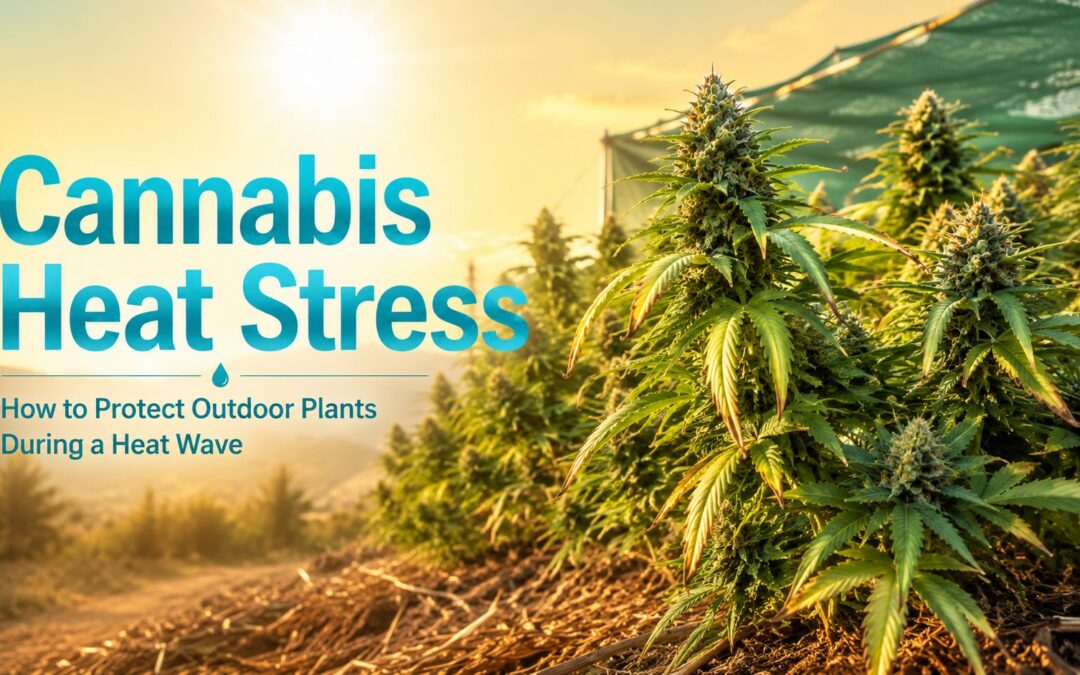
A heat wave can make outdoor cannabis plants look rough fast. Leaves taco, edges curl, pots dry down, and plants that looked strong at breakfast can look tired by mid-afternoon.
Cannabis heat stress happens when the plant can’t keep up with the mix of high temperatures, strong sun, hot roots, wind, and water loss. The answer is not always “water more.” Sometimes the plant needs deeper watering, sometimes it needs temporary shade, and sometimes it needs you to stop adding more stress until the weather settles down.
Use this guide as a heat-wave checkup. Start with what the plant is showing you, check the root zone before reacting, and make the smallest useful correction first.
Heat-Wave Triage: What to Check First
When an outdoor cannabis plant looks stressed in extreme heat, don’t jump straight to feeding, flushing, pruning, or dragging everything around the yard. Start with three simple checks.
Check the leaves
The leaves tell you how the plant is handling sun, heat, and water movement. During a heat wave, watch for upward leaf curl, tacoing, crispy tips, pale upper growth, drooping, or leaves that feel thin and papery.
Some afternoon droop is normal in brutal heat. The real question is whether the plant recovers after the sun drops. If it perks back up in the evening, you may be looking at heat load more than true drought.

If the leaves are yellowing, spotting, twisting, or showing mixed symptoms, compare what you’re seeing with Mosca’s guide on what cannabis leaves tell you about grow issues before changing the whole routine.
Check the root zone
The top of the soil can dry out while the lower root zone still has moisture. Before you water, check below the surface. Push a finger down into the medium, lift the container if possible, or use a moisture meter if that is part of your setup.
A dry, lightweight pot needs water. A heavy pot with moist soil does not need more water just because the leaves are drooping in peak sun.
Check the plant after sunset
Evening recovery tells you a lot. If the plant looks rough at 3 p.m. but stands back up later, it may simply be overloaded by heat and light. If it stays limp into the evening and the soil is dry, you are probably dealing with true underwatering.
That one difference matters because panic-watering a plant with an already-moist root zone can make the problem worse.
How Heat Waves Stress Cannabis from Leaf to Root Zone
Cannabis plants can handle warm weather, but a prolonged heat wave changes how they behave. It has to move more water, cool itself harder, and protect its tissues from intense light and heat.
Leaves lose water faster
Leaves release moisture through transpiration. That process helps cool the plant, but during extreme heat, the plant can lose water faster than the roots can replace it.
That is when you see tacoing leaves, curled edges, and midday wilt. The plant is trying to reduce exposure and slow water loss.
Roots work harder in hot soil
Roots need moisture, oxygen, and a stable growing environment. When the root zone gets too hot, too dry, or too wet, the plant has a harder time pulling water and nutrients properly.
Containers are especially vulnerable. A fabric pot can dry fast in hot wind. A dark plastic pot can heat up hard in full sun. Plants in the ground usually have more soil volume around the roots, but they can still struggle during a long dry stretch.
Nutrient uptake can get messy
Heat stress can make nutrient symptoms harder to read. A plant may look hungry because it is not taking up nutrients well, not because the feed is actually too weak.
That is why heavy feeding during a heat wave is risky. If the root zone is already stressed, higher nutrient levels can lead to burnt tips, clawing, lockout, or salt buildup. If you are unsure whether the issue is feeding or environment, Mosca’s guide on what to feed cannabis plants from seedling to harvest is a better place to start than guessing.
Heat Stress vs. Underwatering: Don’t Panic-Water
Heat stress and underwatering can look almost identical. Both can cause drooping, curled leaves, tired stems, and a plant that looks like it needs help right now.
The difference is what is happening below the surface.
Signs the plant is actually thirsty
A truly underwatered cannabis plant usually has dry soil below the top layer, a light container, and drooping that does not improve after peak heat passes.
Other clues include dry leaf edges, thin leaves, slowed growth, and soil pulling away from the sides of the pot.
Signs the plant is heat-stressed but not dry
A heat-stressed plant may droop in the afternoon even when the root zone still has moisture. The pot may still feel heavy. The soil may be damp below the surface. The plant may recover in the evening once the light intensity drops.
That plant may need shade, airflow, mulch, or cooler roots more than it needs another round of water.
Signs you may be overwatering
Overwatering can also cause drooping. The plant looks tired, but the soil is wet. Growth slows, lower leaves may yellow, and the root zone can start to smell stale or sour if drainage is poor.
Cannabis roots need oxygen. During a heat wave, growers sometimes keep watering because the leaves look sad, but constantly wet roots can slow the plant down.
Watering Cannabis Plants During a Heat Wave
Watering during a heat wave is about depth, timing, and root-zone moisture. It is not about following a rigid schedule.
University of Maryland Extension recommends checking soil moisture below the surface and watering the roots, not the leaves. Their guidance also supports morning watering because watering during the heat of the day can increase water lost to evaporation, while late-day overhead watering may increase disease risk in some plants.
Water early when possible
Morning watering gives the plant moisture before the hardest part of the day. It also gives the surface time to dry before night, which helps reduce wet foliage and stale moisture around the plant base.
Evening watering is not automatically wrong, especially if a container is truly dry and the plant is stressed. Just keep water focused on the medium, not the leaves.

Water deeply, not shallowly
Deep watering encourages roots to push outward and downward. Frequent shallow splashes keep moisture near the surface, leaving the deeper root zone dry.
For containers, water slowly until the medium is evenly moist and drainage is working. For raised beds or in-ground plants, water farther from the main stem so the entire root zone receives adequate moisture.
University of Maryland Extension also notes that deep, infrequent watering encourages deeper root growth, while frequent light watering encourages shallow roots.
For a deeper dive, use Mosca’s guide to watering outdoor cannabis plants in summer heat.
Adjust for containers, wind, and soil type
Small containers dry faster than big ones. Fabric pots dry faster than plastic. Sandy or lighter mixes dry faster than heavier soil. Wind can dry plants out even when the temperature does not look extreme.
Pay closer attention to plants that are:
- In small containers
- In fabric pots
- Sitting on concrete, gravel, blacktop, or hot decks
- Recently transplanted
- Exposed to all-day wind
- Growing in light, fast-draining mixes
If your plants were recently moved outdoors, revisit Mosca’s guide to outdoor cannabis plant care after transplanting so you are not asking young roots to handle more than they are ready for.
Keep Roots Cool and Protect the Canopy
Once watering is handled, the next job is to reduce the heat load. That means protecting the soil, the container, and the plant during the harshest part of the day.
Use mulch to slow dry-down
Mulch can help protect soil moisture and reduce heat stress around the root zone. Straw, leaf mulch, composted material, or another clean outdoor mulch can work well.
Keep mulch slightly away from the main stem. You want to protect the soil, not trap wet material against the plant base.
Shade the pot, not just the plant
A cannabis plant in a hot container can struggle even if the leaves look okay. Dark pots sitting in direct sun can heat up fast. Fabric pots breathe well, but they can also dry down quickly during hot, windy weather.
Move containers off hot surfaces if possible. If you cannot move them, create a buffer under the pot or shade the sides of the container. Even a simple barrier can reduce the amount of heat the root zone absorbs.
Use temporary shade with airflow
Shade cloth can help during a brutal heat wave, especially for young plants, container plants, recently transplanted plants, and exposed plants with no afternoon break.
The goal is not to hide the plant all day. The goal is to soften peak afternoon sun while keeping airflow moving.
Good temporary shade should protect the plant during the hottest hours, allow some morning or late-day sun, stay off the leaves, and come down when the heat wave breaks.
Avoid plastic covers unless they are well-vented and being used for a specific reason. Plastic can trap heat and make the problem worse.
What to Pause Until the Heat Breaks
Heat waves are not the time to do everything at once. A stressed plant needs stability before correction.
Pause heavy feeding
Do not push nutrients harder just because a plant looks tired. Heat-stressed plants can show pale growth, burnt tips, clawing, or slowed uptake for reasons that are not solved by stronger feed.
This is also where “hot soil” can confuse growers. In cannabis cultivation, “hot soil” usually means the medium is too nutrient-rich, not that the soil temperature is too warm. Learn more about how to prevent hot soil before adding more amendments or increasing feed strength.
Pause topping and aggressive training
A wilted plant is more easily damaged. Branches can snap, recovery can be slow, and the plant may not have the energy to respond as it would under better conditions.
Low-stress adjustments are fine if the plant is healthy and flexible, but save topping, hard bends, and major structural work for cooler weather and active growth.
Pause hard pruning
Removing too much leaf during a heat wave can reduce the plant’s natural shade and stress buffer. Clean up dead or damaged material when needed, but do not strip the plant just because you are trying to “help.”
Wait until the plant is standing back up, pushing clean new growth, and drying down normally again.
Watch Pests While Plants Are Stressed
Heat-stressed cannabis plants can become easier targets for pests. Hot, dry conditions can also make certain pest problems move faster, especially if plants are dusty, crowded, or already weakened.
Mosca’s IPM guide emphasizes cleanliness, inspections, identification, and record-keeping as core pest management habits. It also points to regular crop inspections and quick pest identification as important parts of protecting cannabis plants.
Check the hidden spots
Look under leaves, around new growth, along branch joints, and near the soil line. Watch for speckling, webbing, eggs, sticky residue, distorted leaves, or tiny moving pests.
Do the inspection early or late, not under peak afternoon sun.
Keep airflow open
Crowded, stressed plants can create pockets of poor airflow. Remove dead leaves and debris from around the base of the plant, keep spacing clean, and avoid letting damaged material sit in the canopy.
For a deeper pest prevention routine, use Mosca’s Integrated Pest Management Guide.
How to Help Cannabis Plants Recover After a Heat Wave
When the weather finally breaks, do not rush straight into feeding, pruning, topping, or transplanting. Let the plant show you what it has recovered.
Look for clean new growth
Old, damaged leaves may not repair themselves. That is normal. Focus on new growth, leaf posture, and root-zone behavior.
Good recovery signs include:
- Leaves standing up in the morning
- New growth forming cleanly
- Less curl on fresh leaves
- Stems firming back up
- Soil drying down at a normal pace
- The plant is drinking steadily again
Ease back into the routine
If the plant is growing again, you can gradually return to normal watering, feeding, and training. If it is still stalled, keep conditions steady and avoid stacking another stress event on top of the heat wave.
A plant that just survived several days of extreme heat does not need a heavy-handed “reset.” It needs a stable environment and time to regain momentum.
Take Care of Yourself While You Take Care of the Plants
Heat waves are hard on growers too. National Weather Service heat safety guidance warns that heat can be taxing on the body and can lead to heat-related illness.
Check plants early in the morning or later in the day when possible. Bring water with you, take breaks, and do not try to solve every plant problem under peak afternoon sun.
The plants can usually wait a few hours. Your safety should not.
Outdoor Cannabis Heat Wave Checklist
When the forecast looks rough, keep the plan simple:
- Check plants early in the morning.
- Read the leaves, but check the root zone before reacting.
- Water deeply when the root zone is dry.
- Avoid shallow panic watering.
- Use mulch to slow moisture loss.
- Shade containers and exposed plants during peak heat.
- Keep airflow moving.
- Pause heavy feeding.
- Hold off on topping, transplanting, and hard pruning.
- Inspect for pests.
- Watch recovery after sunset and the next morning.
Heat-wave management is mostly about staying steady. Read the plant, check the root zone, and adjust one thing at a time.
FAQs About Cannabis Heat Stress
Cannabis heat stress often shows up as tacoing leaves, upward-curling leaf edges, dry tips, pale upper growth, and plants that droop hard during peak afternoon heat. If the plant perks back up after sunset and the root zone still has moisture, it may be reacting to heat intensity more than to true drought.
Not automatically. Check the root zone first because the top of the soil can look dry while the lower root area still has moisture. Deep watering is better than shallow panic watering because it supports a stronger root zone and better drought tolerance. University of Maryland Extension also recommends watering deeply and checking soil moisture below the surface before watering again.
Yes, cannabis plants can usually recover from short-term heat stress if the root zone stays healthy and the plant is not pushed too hard while stressed. Damaged leaves may not fully repair, so watch the new growth, morning leaf posture, and how steadily the plant starts drinking again after the heat breaks.
Shade cloth can help during peak afternoon heat, especially for young plants, container plants, recently transplanted plants, or plants sitting in exposed areas. Keep airflow moving and avoid fully blocking the plant from light all day. The goal is temporary relief, not turning the grow into a shaded corner.
Hold off on heavy feeding, topping, transplanting, hard pruning, and aggressive training until the plant is actively growing again. Heat-stressed plants need stability first, and extra feed or major plant work can slow recovery. Do basic checks, keep airflow clean, and save bigger moves for cooler weather.
Strong Outdoor Plants Start Before the Heat Wave
Heat waves are stressful, but panic usually causes more problems than the heat itself. Keep the root zone stable, reduce peak sun stress, water with purpose, and wait on major plant work until conditions improve.
Start with quality cannabis seeds, then give your plants the steady care they need to handle real outdoor conditions. Strong summer cannabis plant care comes down to timing, observation, clean soil, airflow, and genetics that can keep up when the weather gets rough. Check out Mosca’s New Drops to buy cannabis seeds for your next grow.