

Table of contents
- What Changes the Minute Cannabis Is Harvested
- Handle Fresh Cannabis Like the Resin Matters
- Wet Trim or Dry Trim? Let the Drying Conditions Help Decide
- Slow the Dry Down Without Leaving Flowers Wet
- Heat, Light, and Airflow Still Matter After Harvest
- Do Not Trim Away the Good Stuff
- When Is Cannabis Ready to Move From Drying to Curing?
- Post-Harvest Mistakes That Can Cost You Quality
- FAQs About Drying, Trimming, Trichomes, and Terpenes
- Protect What You Grew
You can grow great flower all season and still beat it up after harvest. Once the branches come down, every unnecessary squeeze, hot drying room, rough trim, or rushed dry can work against the trichomes and terpene profile you spent months developing.
The plant may be finished growing, but the grower’s job is not finished yet. Post-harvest cannabis care is mostly about protecting what is already there: handle the flowers gently, keep the drying environment under control, let moisture leave the buds evenly, and resist the urge to rush from one stage to the next just because harvest day finally arrived.
What Changes the Minute Cannabis Is Harvested
Before harvest, you are still managing a living plant. Water, nutrients, weather, flower development, and trichome maturity all matter. After the cut, those priorities change. You are no longer trying to push new growth or build more flower; you are trying to preserve resin, aroma, flower structure, and the quality the plant produced during the grow.
If you followed Mosca’s Croptober harvest checklist, your drying space should already be cleaned, tested, and ready. That preparation matters because freshly cut cannabis does not benefit from sitting around while you figure out where to hang it or how you are going to control the room.
Trichomes Are Easy to Damage
Those frosty resin glands covering the flowers and sugar leaves are not decorations. Trichomes hold many of the cannabinoids and aromatic compounds growers are trying to preserve, and mature resin heads are delicate enough that unnecessary rubbing, squeezing, and rough handling can knock them around or break them.
Mosca’s guide on how to increase trichome production already stresses careful handling as harvest approaches. Keep that same mindset through drying and trimming. You do not need to squeeze every cola to check density or handle the same bud over and over to decide whether it feels dry.
Drying Conditions Can Change the Aromatic Profile
Terpenes are volatile aromatic compounds, so drying conditions matter after harvest. A 2026 Journal of Cannabis Research study on post-harvest cannabis drying found that drying method significantly influenced terpene composition and essential-oil retention, while cannabinoid composition stayed comparatively stable across the treatments studied.
That does not mean a home grower needs commercial drying equipment. It does reinforce a practical point: the way cannabis dries can affect the flower you end up with. The goal is controlled moisture removal without excessive heat, rough handling, or the kind of stagnant, damp conditions that invite mold.
Handle Fresh Cannabis Like the Resin Matters
Harvest day can get hectic, especially when several outdoor plants finish close together. Branches come down, scissors get sticky, tables fill up, and it becomes easy to treat freshly cut cannabis like yard waste. A little discipline here goes a long way because fresh, resinous flowers are easiest to protect when you handle them as little as necessary.
Hold Branches Instead of Buds
Whenever possible, move harvested material by the stem or branch rather than grabbing the flower itself. That gives you better control without compressing resin-covered surfaces and makes it easier to transfer branches into the drying space without dragging colas across one another.
Do Not Pile Fresh Flowers Together
Fresh cannabis holds a lot of moisture. Stacking branches or buds in a deep tote, bucket, bag, or pile can trap moisture and crush flowers. If you are harvesting more than you can hang immediately, spread the cut material out, keep branches separated, and move it into the prepared drying space as soon as practical.
Keep Cut Cannabis Out of Direct Sun
The outdoor season depended on sunlight, but harvested flowers do not need to sit baking in it. Once branches are cut, move them out of direct sun and away from hot vehicles, greenhouse benches, or garage corners that heat up during the day. At this stage, extra heat and light don’t help the plant build anything new.
Wet Trim or Dry Trim? Let the Drying Conditions Help Decide
Growers can argue wet trim versus dry trim all day, but no single method is automatically right for every harvest. Wet trimming removes more leaf material soon after harvest, while dry trimming leaves more of that material on the branches during drying and cleans up the flowers afterward.
Mosca’s Germination to Harvest Part III covers the basic drying and curing workflow. For this decision, think about the condition of the flowers and the environment you actually have instead of choosing a method because somebody insists there is only one right way.
When Wet Trimming Can Make Sense
Removing more leaf material early can make sense when you are dealing with a humid drying environment, very leafy plants, or dense flower that needs more space around it. It also lets you remove dead, damaged, or questionable plant material before the crop goes into the drying room.
The tradeoff is more handling while flowers are fresh and sticky. Work by the branch when you can, use clean scissors, and avoid turning buds in your hands more than necessary.
When Dry Trimming Can Make Sense
Leaving more leaf material on the branches can slow moisture loss in drier conditions and reduce direct flower handling on harvest day. Once the branches have dried, the remaining leaves can be trimmed away, but dry flower still needs a gentle touch because brittle material and mature trichomes can shed when handled roughly.
The Environment Matters More Than the Argument
A grower dealing with humid fall weather has a different drying problem than someone harvesting into a dry, heated house. Flower density, plant size, airflow, room volume, and how well you can control temperature and humidity all matter. Choose the trim approach that helps you manage the harvest in front of you rather than forcing the harvest to fit a rule.
Slow the Dry Down Without Leaving Flowers Wet
“Slow dry” gets repeated so often that it can sound like the goal is simply to keep cannabis damp for as long as possible. It is not. You want moisture leaving the flower in a controlled, even way: too fast and the outside can become brittle while denser material still holds moisture; too slow, especially with poor airflow and crowded branches, and microbial problems become a bigger concern.
Research on post-harvest cannabis and hemp keeps pointing to the same larger lesson: drying conditions influence final quality. A 2025 Cornell-affiliated study of post-harvest drying and curing found that post-harvest methods affected moisture behavior, color, decarboxylation, and microbial levels in cannabinoid-type hemp. The exact setup in a home grow will be different, but controlled drying still matters.
Give Branches Enough Space
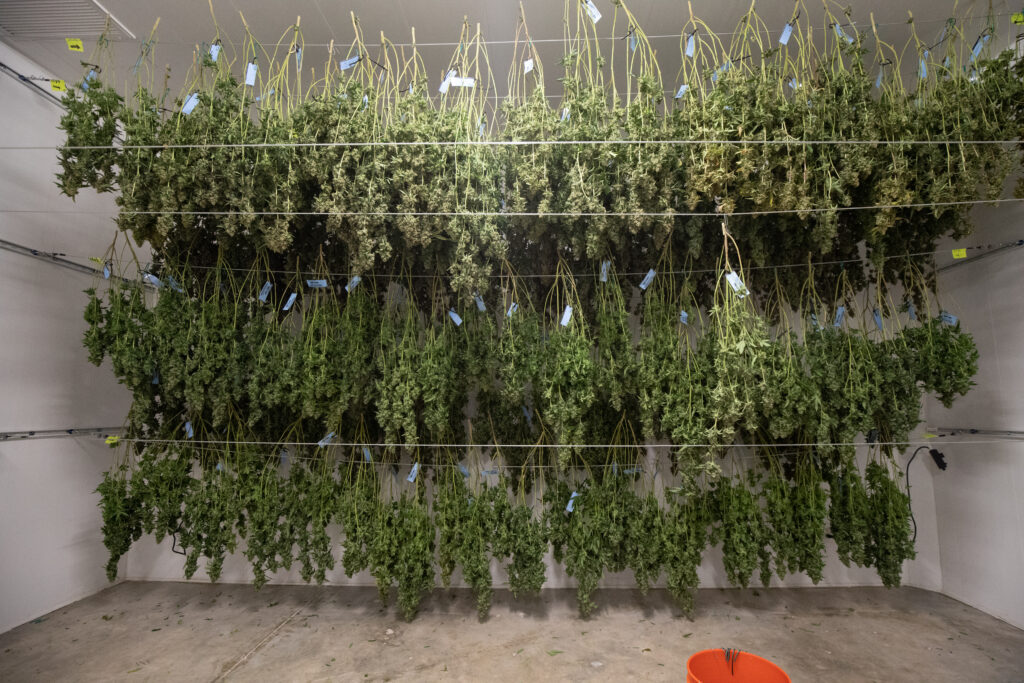
Do not pack the drying room so tightly that flowers are touching everywhere. Air needs room to circulate around the hanging material, and dense branches jammed together can create pockets where moisture hangs around longer than it should. If weather forces you to harvest more at once than expected, solve the space problem instead of cramming everything into one small area.
Move Air Around the Flowers, Not Through Them
Air exchange matters, but blasting a strong fan directly at hanging buds is different from keeping the room gently moving. Direct airflow can dry exposed surfaces faster than the inside of dense flowers. Position fans so they move air through the space without turning the harvest into a wind tunnel.
Check Dense Flowers More Closely
Big colas deserve extra attention because moisture can remain inside even when the outside feels dry. Look between flowers and around dense interior areas. If anything smells musty, feels unusually damp, or shows suspicious brown or gray material, investigate it instead of assuming the entire branch is fine.
Heat, Light, and Airflow Still Matter After Harvest
You spent the outdoor season watching heat waves, storms, humidity, and other environmental swings. Post-harvest conditions are more controlled, but the same habit of watching the environment still matters. A drying room can change noticeably from morning to night, especially if it is in a basement, garage, spare room, or other space that follows the weather outside.
Keep the Drying Space Dark
Once flowers are harvested, they do not need grow lights or direct sunlight. Keep the drying area dark or dim and focus on temperature, humidity, and air exchange instead of exposing cut material to more light than necessary.
Do Not Try to Speed Things Up With Heat
A heater may seem like an easy fix if flowers take longer than expected to dry, but faster isn’t automatically better. The 2026 cannabis drying study found meaningful differences in volatile and terpene retention between drying methods, which is another reason to avoid treating high heat as a shortcut.
If the dry is running too slowly, look first at spacing, airflow, room humidity, and how much wet plant material is hanging in the space. Fix the environment rather than trying to cook the moisture out of the flowers.
Monitor the Room, Not Just the Buds
A hygrometer and thermometer tell you more than repeated squeezing. Watch how the drying space behaves over the course of the day and make small adjustments when needed. Controlled does not have to mean complicated; it means you know what the room is doing and are not guessing based on one bud you keep touching.
Do Not Trim Away the Good Stuff
There is a point where trimming stops cleaning up the flower and starts shaving away useful resin-covered material. Not every bud needs to look identical, and an aggressive manicure isn’t automatically better.
Know What You Are Cutting
Large fan leaves are easy to identify and usually carry far fewer visible trichomes than the small sugar leaves tucked around the flower. Sugar leaves can be quite resinous, especially close to the bud, so how tightly you manicure them comes down partly to preference and what you plan to do with the flower. Trim with purpose rather than cutting simply because you can see another leaf edge.
Watch the Trichomes While You Work
Sticky scissors tell you quickly how much resin is on mature flower. Use clean, sharp tools and make deliberate cuts instead of hacking away at the bud. If your gloves, tray, and scissors are collecting a lot of resin, that is a good reminder that every extra pass also removes some of what you worked to grow.
Save Clean, Resinous Trim
Do not automatically throw all sugar-leaf trim in the trash. Clean, resinous trim can be kept separate from stems, fan leaves, damaged plant material, and waste for other uses later. That also gives you something useful to work with if you want to experiment with cannabis kitchen ideas, edibles, or drinks after harvest.
When Is Cannabis Ready to Move From Drying to Curing?
This is where patience gets tested. The outside of a flower can feel dry before the inside is ready, so moving cannabis into sealed containers too early can trap excess moisture. Waiting until everything is bone dry creates the opposite problem and can leave the flower brittle before curing even begins.
Instead of relying on one test, look at the whole branch and several different flower sites. Check how smaller stems behave when bent, whether flower surfaces feel dry rather than wet or tacky, whether dense buds still feel damp inside, and whether different branches are drying at roughly the same pace. Do not rush an entire harvest into jars because one small branch seems ready.
Once the flower has dried properly, the next stage is curing. Rather than repeating that process here, Mosca’s guide to curing your weed for the best smoke walks through jar management, inspection, air exchange, and the curing stage in more detail.
Post-Harvest Mistakes That Can Cost You Quality
Months of growing can make harvest feel like the finish line, and that is exactly when tired or excited growers can start rushing. Most post-harvest problems don’t come from one mysterious mistake; they come from overhandling the crop, drying it too aggressively, or ignoring the room once the branches are hanging.
Watch out for these common problems:
- Leaving cut branches sitting in direct sunlight or a hot space
- Tossing fresh colas into piles or deep containers
- Handling and squeezing flowers constantly
- Over-trimming just to make every bud look identical
- Using excessive heat to speed up drying
- Pointing strong fans directly at hanging flowers
- Crowding wet branches together
- Ignoring humidity changes in the drying space
- Moving flowers into sealed containers too soon
- Letting flowers overdry before curing
- Ignoring suspicious spots inside dense colas
You do not need an elaborate commercial setup to avoid most of these problems. A clean space, enough room for the harvest, basic environmental monitoring, gentle handling, and patience will take you a long way.
FAQs About Drying, Trimming, Trichomes, and Terpenes
Repeated or rough handling can damage or remove trichomes, especially on mature resin-covered flowers. Handle branches by the stem when practical, avoid unnecessary squeezing, and keep flower contact to a minimum during harvest, drying, and trimming.
Neither method is automatically better for every grow. Wet trimming can remove excess plant material earlier in humid conditions, while dry trimming can help slow moisture loss in a drier environment. Flower density, room humidity, airflow, and personal workflow should all factor into the decision.
Yes. Rapid drying can leave the outside brittle while denser material still holds moisture, and drying method can influence volatile compounds such as terpenes. A controlled dry is more useful than simply trying to finish as quickly as possible.
Gentle room airflow helps prevent stagnant pockets, but a strong fan blowing directly onto flowers can dry exposed surfaces too quickly. Aim for air movement through the room rather than a constant blast on the hanging branches.
Move to curing only after the flowers have dried evenly enough that you aren’t sealing excess internal moisture into a container. Check several branches and dense flower sites rather than using one small bud to judge the entire harvest.
Protect What You Grew
Great flower does not stop being a grower’s responsibility when the plant comes down. Careful handling, trimming, and drying help protect the trichomes, terpene profile, and flower quality you spent an entire season building.
Start your next grow with Mosca’s New Drops and quality cannabis genetics worth protecting all the way through harvest.