

Outdoor Cannabis Flowering in August: What to Change as Plants Move into Bloom
August can change an outdoor cannabis garden quickly. Plants that spent summer building leaves and branches begin stretching, showing fresh pistils, and forming the first clusters that will become flowers.
This transition is more than a visual change. Outdoor cannabis flowering shifts the grower’s job from shaping the plant to protecting what it has built. Aggressive topping and bending give way to branch support, steady nutrition, careful watering, better airflow, and closer inspections.
The goal is not to overhaul the entire routine the moment you see a white hair. It is to recognize the transition early and make gradual adjustments that prepare the plant for heavier flowers, cooler nights, morning dew, late-summer storms, and increased pest pressure.
How to Know When Outdoor Cannabis Is Entering Flower
Outdoor photoperiod plants begin flowering as nights grow longer, but they do not all start on the same date. Genetics, latitude, local light exposure, plant maturity, and environmental conditions all affect timing.
Some outdoor plants begin showing clear changes in late July. Others wait until August or later. Instead of treating the calendar as a switch, watch the plant.
Look for pre-flowers at the nodes
Start at the nodes, where branches meet the main stem. Female pre-flowers usually appear as small, teardrop-shaped growth with fine white hairs emerging from them. These hairs are part of the female flower structure and are one of the clearest signs that the plant is sexually mature.
A few pre-flowers do not necessarily mean full flowering has begun. Cannabis plants can show sex while they are still growing vegetatively. The stronger signal is when fresh pistils begin appearing at multiple branch tips and the plant’s overall growth pattern starts changing.
Growers using regular seeds should continue checking every plant carefully. Male plants form pollen sacs instead of pistillate flowers and may show sex before females. Mosca’s guide to identifying male and female cannabis plants can help you compare what is developing at the nodes.
Watch the branch tips
During vegetative growth, branch tips mainly produce new leaves and stems. As flowering begins, those tips start stacking tighter growth with fresh pistils.
At first, the flowers may not look like recognizable buds. You may see small leafy clusters, short spaces between new growth, and white hairs appearing around the tips. Over the following weeks, those sites begin filling out and connecting.
Expect the flowering stretch
Many cannabis plants continue gaining height after flower initiation. This period is commonly called the flowering stretch.
The amount of stretch depends heavily on genetics. Some plants remain compact and add only moderate height. Others produce long gaps between nodes and push branches upward quickly.
Stretch is not automatically a problem. It becomes a problem when tall branches lean into one another, outgrow their supports, close airflow pathways, or become too exposed to wind. Watch where the new growth is going and prepare to support it before flowers add weight.
Remember that autoflowers follow a different schedule
Photoperiod-sensitive cannabis responds to changes in day and night length. Autoflowering cannabis begins flowering primarily according to age and genetics, so an autoflower may already be deep into flower while a nearby photoperiod plant is only beginning its transition.
That difference affects training, feeding, and timing. Autoflowers have a shorter recovery window and generally respond best to lighter, earlier training. Mosca’s comparison of autoflower and feminized photoperiod seeds explains how the two types differ.
Give Plants an Early-Flower Checkup
Before changing the feeding schedule or pruning the canopy, assess the entire plant. Early flower is easier to manage when existing problems are handled before the flowers become dense.
Check overall plant health
A healthy plant entering flower should have active growth, reasonably upright leaves, flexible branch tips, and a root zone that dries at a predictable rate.
Before you reach for a nutrient bottle or the pruning shears, take a slower look. Yellowing, burnt or curling tips, persistent drooping, stalled growth, rubbing branches, pest damage, or a root zone that stays wet for too long all tell you the plant needs a closer check. A container that suddenly dries much faster than usual is worth noticing too.
If several symptoms appear together, do not assume the plant suddenly needs bloom fertilizer. Watering problems, heat stress, root issues, pests, pH changes, and nutrient buildup can all look like feeding problems.
Mosca’s guide to what cannabis leaves reveal about grow issues can help narrow down the possibilities before you make a major correction.
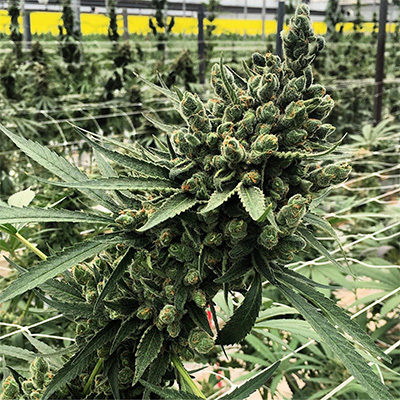
Recheck the sex of every plant
Plants grown from regular seeds need another careful inspection as flowering approaches. Check the nodes throughout the plant instead of relying on one branch.
Even feminized plants should be observed during major environmental stress. Extreme heat, physical damage, interrupted darkness, inconsistent watering, and other problems can place pressure on a plant. Finding unusual flower structures early gives you more time to decide what to do without risking the rest of the garden.
Check ties, stakes, cages, and trellises
A tie that was loose in June may be cutting into a thicker stem by August. Walk around each plant and inspect every contact point.
Loosen tight ties, replace rigid material with soft plant ties, and make sure stakes are firmly anchored. Check cages and trellises for sharp edges or branches rubbing against wire.
The support system should guide and hold the plant without choking stems or forcing branches into unnatural angles.
Establish a watering baseline
Notice how quickly the root zone dries, how heavy containers feel after watering, and whether plants recover normally after hot afternoons.
A plant entering stretch may begin using water more quickly, but that does not mean every plant needs an automatic increase. Check the medium below the surface and adjust based on plant size, weather, wind, container type, drainage, and root-zone moisture.
Stop Shaping the Plant and Start Supporting It
Early flowering marks the end of the main structural-training window. The plant is moving from building its framework to using that framework.
Avoid late topping
Topping removes active growth and asks the plant to redirect energy into new leaders. That can be useful during vegetative growth when a healthy plant has time to recover.
Once flower initiation is underway, late topping can remove developing flower sites and create unnecessary stress. If the plant is already stretching and producing clusters of pistils at the tips, the time for major topping has usually passed.
Growers interested in structured techniques such as mainlining cannabis should plan those methods much earlier in vegetative growth.
Keep late adjustments gentle
You can still reposition a flexible branch, loosen a tie, or guide new growth into an open section of a trellis. The difference is intensity.
Avoid hard bends, crushed stems, aggressive supercropping, or forcing woody branches into dramatic new positions. If a branch has already become stiff, support the direction it naturally wants to grow.
Build support before flowers get heavy
Branches that look strong in early August may struggle once flowers begin adding weight. Wind and rain increase that load.
You do not need an elaborate setup. A few simple outdoor supports can do the job:
- Stakes placed beside individual branches
- Tomato-style cages
- Trellis netting
- Soft garden ties
- Horizontal support lines
- Additional anchoring around large containers
Add support early enough that you can still reach the interior of the plant without crushing flowers. Waiting until a branch is folded over in a storm turns a simple preparation job into an emergency repair.
Adjust Early-Flower Nutrition Gradually
One of the most common early-flower mistakes is changing the entire feeding program overnight. Plants do need different nutritional support as they move into bloom, but the transition is gradual.
Do not remove nitrogen too early
Nitrogen supports chlorophyll, leaves, stems, and photosynthesis. Cannabis plants continue using it during the stretch and early flowering stage.
A plant deprived of nitrogen too quickly may begin yellowing before it has built enough healthy leaf area to support flower development. Some reduction may be appropriate as flowering progresses, but nitrogen should not disappear the moment pistils show.
Shift toward bloom support without bloom-bombing
Phosphorus supports energy transfer, roots, and reproductive development. Potassium contributes to water regulation, plant strength, and stress response. Both remain important as flowers develop.
However, more bloom fertilizer does not automatically create bigger flowers. Excessive feeding can cause burnt tips, dark clawing leaves, salt buildup, pH problems, and nutrient lockout.
Use the manufacturer’s schedule as a starting point rather than a command. Introduce changes gradually, watch how the plant responds, and avoid stacking several new additives at the same time.
Mosca’s cannabis nutrient guide explains how nitrogen, phosphorus, potassium, secondary nutrients, and micronutrients fit into each growth stage.
Match feeding to the growing medium
Plants in living soil, amended outdoor beds, coco, and bottled-nutrient systems do not respond on the same schedule.
Organic amendments need time and microbial activity to become available. A fast-acting mineral feed can change the root zone more quickly. Large in-ground beds may buffer nutrition better than small containers.
Before adding anything, consider what is already in the medium, when the plant was last fed, how quickly the product becomes available, and whether the plant is actually showing a need.
Diagnose before feeding harder
Yellow leaves do not always mean the plant needs more fertilizer. Overwatering, pH imbalance, heat stress, root damage, and nutrient lockout can all interfere with uptake.
Check where symptoms begin. Problems starting on older leaves can suggest something different from distorted or discolored new growth. Mosca’s guide to common cannabis nutrient deficiencies provides a useful comparison.
Expect Water Demand to Change During Stretch
Outdoor cannabis flowering often begins while August temperatures are still high. At the same time, plants may be gaining height, increasing leaf area, and forming more flower sites. That combination can change how quickly they use water.
Continue checking the root zone
Do not water only because the plant is flowering or because the soil surface looks dry. Check below the surface, lift containers when possible, and observe whether the plant recovers after peak afternoon heat.
A large stretching plant may need water more frequently than it did earlier in summer. A plant in a large bed or moisture-retentive soil may not.
Mosca’s guide to watering outdoor cannabis in summer heat covers container weight, deep watering, drainage, mulch, and the difference between heat stress and true thirst.
Water the roots instead of the flowers
Direct water into the growing medium and avoid repeatedly soaking the canopy. Wet flower clusters take longer to dry than vegetative leaves, especially as they gain density.
Morning is usually the easiest watering window because the plant has moisture available before the hottest part of the day and accidental splashes have time to dry.
Adjust after rain
A short storm can soak the leaves while barely reaching the deeper root zone. A longer storm can saturate containers and beds for days.
Check the soil after rain instead of assuming the plant either does or does not need water. Make sure drainage paths are open, empty standing water from trays, and watch for containers that remain unusually heavy.
Open the Canopy Before Buds Become Dense
Airflow becomes more important as flowering sites fill in. A crowded vegetative canopy may look impressive, but dense interior growth can trap moisture and make inspections difficult.
Remove dead and damaged material first
Start with leaves and small growth that are already dead, badly damaged, lying on the soil, or trapped in crowded interior spaces.
Dead plant material can hold moisture and hide pests. Removing it improves visibility without placing the same stress on the plant as a major pruning session.
Use clean tools, make deliberate cuts, and remove debris from the grow area.
Thin selectively instead of stripping the plant
Healthy leaves power photosynthesis and help support flower development. Early flower cleanup should improve airflow and access without leaving the plant bare.
This is the kind of growth worth cleaning up:
- Branches rubbing against one another
- Weak interior growth receiving very little light
- Leaves resting on the soil or container
- Congested areas that stay damp
- Damaged growth that cannot contribute much
- Small lower shoots unlikely to reach the canopy
Make a few useful changes, then step back and look through the plant. You should be able to see pathways for air and reach important branches for inspection.
Avoid heavy defoliation during stress
Do not combine aggressive pruning with extreme heat, severe pest pressure, drought stress, or a major feeding correction. Stabilize the plant first.
If plants are still struggling with high temperatures, revisit Mosca’s guide to protecting outdoor cannabis during a heat wave before removing a large amount of foliage.
Increase Pest and Weather Inspections
Flowers create new hiding places, and late summer brings a different mix of risks. A weekly glance from across the yard is no longer enough.
Inspect from the inside out
Look underneath leaves, along stems, at branch junctions, and inside the canopy. Check developing flower sites without squeezing or rough handling.
During each check, look for:
- Chewed leaves, holes, or eggs on leaf undersides
- Webbing, sticky residue, or other signs of small insects
- Frass or dark droppings inside the canopy
- Discolored flower material, wilted tips, or unusual powdery or fuzzy growth
Mosca’s Integrated Pest Management Guide explains why prevention, regular scouting, identification, and recordkeeping should come before a pest problem gets out of control.
Pay attention after rain and heavy dew
Developing flowers can hold moisture where branches overlap or where the canopy is especially thick. After storms or wet mornings, inspect dense areas and make sure airflow can reach the interior.
You do not need to panic every time it rains. The goal is to notice flower sites that remain wet, damaged, or blocked from airflow.
Be careful about spraying developing flowers
Flowering is not the time to spray every product in the shed. Residues can remain on flower surfaces, and some products that are appropriate during vegetative growth may not be suitable for developing buds.
Identify the problem first. Read and follow the full product label, including crop restrictions, application timing, protective equipment, and preharvest intervals. When possible, rely on prevention, physical removal, sanitation, airflow, and targeted controls appropriate to the plant’s stage.
What Healthy Early Flower Looks Like
Early flowering plants do not have to look perfect, but they should show steady progress.
What you want to see is steady, uncomplicated progress: fresh pistils at several branch tips, active stretch without collapsing stems, leaves holding reasonably good posture, and flower sites developing at a similar pace. Watering should remain predictable, supports should keep branches separated, and the plant should bounce back after normal afternoon heat instead of looking worse each day.
Some older lower leaves may fade as the season progresses, but rapid yellowing throughout the plant deserves a closer look. Focus on the pattern, the speed of change, and whether new growth remains healthy.
Early-Flower Mistakes That Can Cost You Later
Small mistakes in August can become much harder to correct once flowers are dense.
Continuing aggressive training
Late topping, hard bending, and major structural changes remove flower sites and add recovery stress. Shift the goal from creating more branches to protecting the branches already in place.
Switching nutrients overnight
A sudden jump from strong vegetative feed to heavy bloom additives can upset the root zone. Transition gradually and keep watching leaf color, tip condition, plant vigor, and soil moisture.
Eliminating nitrogen
The plant still needs green, functioning leaves during stretch and flower development. Reduce nitrogen deliberately instead of starving the plant at the first sign of pistils.
Watering by habit
Plant size, temperature, wind, rain, and root-zone conditions keep changing. Water according to what the soil and plant show you, not simply because another day has passed.
Over-defoliating
Removing every interior leaf may create more stress than airflow. Clean the canopy with a purpose and preserve healthy foliage that is still contributing.
Waiting to support branches
It is easier to stake a healthy upright branch than to repair one that split under wet flowers. Build the support system before the weight arrives.
Ignoring small pest signs
A few holes, droppings, eggs, or damaged flower tips can be the beginning of a larger problem. Early detection gives you more options and usually requires a smaller response.
Outdoor Cannabis Early-Flower Checklist
Use this checklist when your plants begin transitioning into bloom:
- Check nodes and branch tips for female pre-flowers
- Reinspect regular-seed plants for pollen sacs
- Confirm the plant is healthy before changing the routine
- Loosen ties that are cutting into expanding stems
- Add stakes, cages, or trellis support
- Stop topping and aggressive structural training
- Shift nutrients gradually instead of overnight
- Keep moderate nitrogen available during the stretch
- Check soil moisture below the surface before watering
- Keep irrigation focused on the root zone
- Remove dead, damaged, and ground-touching material
- Improve airflow without stripping healthy leaves
- Inspect leaf undersides and developing flowers
- Recheck dense areas after rain and heavy dew
- Record changes in feeding, weather, and plant response
Frequently Asked Questions About Outdoor Cannabis Flowering

Photoperiod cannabis usually begins flowering as nights become long enough for that plant’s genetics, often from late July into August in many Northern Hemisphere gardens. Exact timing varies with latitude, cultivar, plant maturity, weather, and artificial light exposure. Autoflowers begin according to age and genetics rather than the seasonal light cycle.
Early signs include female pre-flowers at the nodes, fresh white pistils at multiple branch tips, tighter growth around developing flower sites, and a noticeable stretch in height or branch length.
Yes, major topping should generally be finished before flowering begins. Once the plant is stretching and producing clusters of pistils, shift from creating new structure to supporting existing branches. Gentle tie adjustments and branch support can continue when needed.
Begin transitioning gradually when the plant shows clear flowering activity. Do not remove nitrogen or apply a heavy dose of bloom fertilizer overnight. The plant still needs balanced nutrition during the stretch, and the correct approach depends on the medium, existing fertility, and plant response.
Selective cleanup can improve airflow and inspection access, but heavy defoliation can stress the plant and remove useful photosynthetic tissue. Start with dead, damaged, crowded, and ground-touching growth. Avoid aggressive pruning when the plant is already dealing with heat, pests, drought, or root problems.
Support the Plant That Will Carry the Harvest
Outdoor cannabis flowering is the point where a summer of growth begins turning into a harvest. The best early-flower care is steady: support the branches, protect the root zone, open the canopy carefully, and inspect often enough to catch problems while they are still small.
Start with quality cannabis seeds, then guide plants into flower with gradual feeding, consistent watering, clean structure, and enough support for the weeks ahead. Strong genetics and attentive early-flower care give outdoor plants a better foundation for healthy flower development. Check out Mosca’s New Drops to buy cannabis seeds for your next grow.