
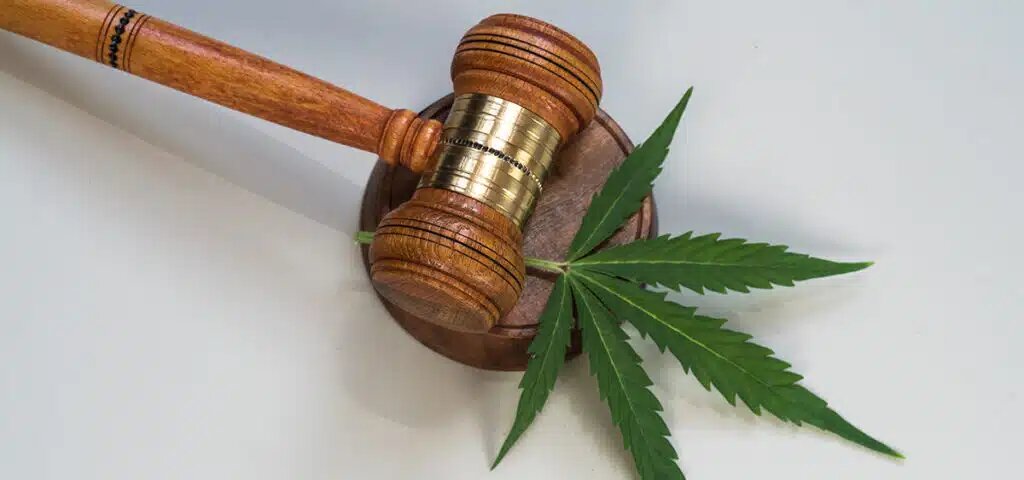
The hemp industry is facing a regulatory reckoning. After years of ambiguity around delta-8 and other intoxicating compounds, the federal government has taken clear steps to close the so-called “Farm Bill loophole” by shifting focus to total THC content. This change redefines how hemp is legally measured, no longer just by delta-9 THC, but by the combined presence of all intoxicating THC isomers and precursors, such as THCA.
While the USDA has until November 2026 to issue complete guidance, language in the most recent federal budget bill already sets the tone: hemp-derived products must contain less than 0.3% total THC on a dry weight basis. This marks a fundamental shift that growers, extractors, and retailers need to understand and act on now.
From Delta-9 to Total THC: Understanding the Change

The 2018 Farm Bill defined legal hemp as cannabis containing less than 0.3% delta-9 THC, measured post-decarboxylation. This wording opened the door to products like delta-8, delta-10, and THC-O, which are chemically synthesized from CBD and technically met the letter of the law, despite being psychoactive.
Now, that loophole is being shut. The new legislation expands the definition of THC to include all forms of tetrahydrocannabinol, not just delta-9. This includes:
- Delta-8 THC
- Delta-10 THC
- THCA (which converts to delta-9 upon heating)
- Other semi-synthetic cannabinoids
Under the new rules, any hemp-derived product that exceeds 0.3% total THC, including decarboxylation potential, would be considered marijuana and regulated accordingly under the Controlled Substances Act. That puts a large segment of the current hemp-derived product market at risk, especially vapes, edibles, and even full-spectrum extracts.
Why Lawmakers Changed the Rules: Policy Motivations and Public Pressure
The movement to tighten hemp laws didn’t come out of nowhere. Since the 2018 Farm Bill legalized hemp by limiting it to 0.3% delta-9 THC, a thriving market developed around hemp-derived cannabinoids that either weren’t measured under that definition or that converted to psychoactive forms when heated. Products like delta-8 THC, delta-10, HHC, and THCA flower proliferated in gas stations, vape shops, and mainstream retailers—often without age restrictions or the safety oversight expected in other regulated markets.
Critics argued this created a regulatory blind spot, with intoxicating products reaching consumers outside the regulatory frameworks designed for marijuana. Dozens of state attorneys general and public health advocates pushed for more explicit federal definitions to close that loophole, citing public safety and enforcement concerns.
The federal response was to rewrite the legal definition of hemp to include total THC (all tetrahydrocannabinol isomers and precursors like THCA) rather than merely delta-9 on a dry-weight basis. This change was tucked into a 2025 government funding bill, effectively preventing intoxicating hemp products from qualifying as legal hemp as of November 12, 2026. Under the new standard, products can contain no more than 0.3% total THC on a dry-weight basis, and final consumer products must be capped at 0.4 milligrams of THC per container. This level excludes most current THC gummies, beverages, and vapes.
Supporters of the rewrite argue it brings legal definitions in line with actual intoxicating effects and prevents unregulated psychoactive products from being marketed inappropriately. Opponents argue that the move goes too far, threatens a multi-billion-dollar industry, and will lead to significant economic losses for growers and small producers.
Which Products Will Be Affected?
The policy shift targets intoxicating hemp products that previously circumvented federal limits by focusing solely on delta-9 THC. Under the new definition, any cannabinoid that contributes to total THC, including delta-8, delta-10, and THCA, is counted, and products that exceed the new thresholds are reclassified as marijuana under federal law. That change affects:
- Hemp-derived THC vapes and cartridges
- Edibles and gummies with psychoactive cannabinoids
- Beverages infused with delta-8 or similar THC analogs
- THCA prerolls and high-THC hemp flowers are intended for consumption
- Synthetic or semi-synthetic cannabinoids derived from CBD are used to create intoxicating effects
Learn more about major and minor cannabinoids in Beyond THC and CBD: The Rise of Minor Cannabinoids.
In many cases, even products that used to be compliant will exceed the 0.4?mg per container THC cap or total THC limits once all isomers are counted, making them illegal under federal standards. The industry impact could be significant; projections estimate that a vast majority of today’s intoxicating hemp product market will not meet the new requirements.
Possible Outcomes: Enforcement, Challenges, and Industry Response
Although the legislation is now federal law, how it will be enforced remains uncertain. A recent Congressional Research Service memo noted that agencies like the FDA and DEA may lack the resources to implement a blanket ban on hemp-derived THC products, leading to potential uneven implementation or priority enforcement patterns similar to marijuana. It’s unclear whether enforcement will be nationwide or focused on specific product categories or regions.
Meanwhile, lawmakers and industry advocates are already pushing back:
- A bipartisan proposal, as noted in Cannabis Business Times, called the Cannabinoid Safety and Regulation Act, has been introduced to establish a federal regulatory framework for hemp products rather than sweeping bans, aiming to preserve much of the existing market while setting safety and quality standards.
- Some House members (including Rep. Nancy Mace) have circulated legislation to repeal the intoxicating hemp ban before the 2026 effective date.
State-level activity also varies: some states are tightening their own hemp THC regulations, while others (such as in Texas) are debating how to balance protection of minors with commercial access to hemp cannabinoids.
What This Means for Delta-8, HHC, and Other Hemp-Derived THC Products
The shift to a total THC limit has profound implications for all intoxicating hemp derivatives, not just ?9-THC. This includes ?8-THC, ?10-THC, THC-O, HHC, and other synthetically derived cannabinoids, which are often produced through isomerization of hemp-derived CBD. Under the new framework, products that exceed 0.3% total THC, regardless of source or process, would be classified as federally illegal cannabis.
Many of these compounds emerged under a legal gray area thanks to the original 2018 Farm Bill’s focus on ?9-THC only. By redefining compliance around total THC content, federal agencies are closing the “intoxicating loophole” and paving the way for stronger oversight. This may reduce the availability of Delta-8 and similar products unless they meet strict production and testing standards.
Potential Industry Shakeups: Winners and Losers
Not every sector of the hemp and cannabis industry will be impacted equally. For example, growers focused on fiber or CBD-rich cultivars with low total THC are less likely to be affected. But brands whose core products rely on converted or concentrated THC analogues may face severe disruptions to their supply chains and business models.
Key challenges ahead:
- Testing labs will need to standardize methodologies for calculating total THC, including post-decarboxylation values.
- Retailers may need to reformulate or reclassify products in response to new guidance.
- Small producers could struggle to afford reformulation or legal consultation to stay compliant.
However, brands that adapt early, by using compliant genetics, transparent lab results, and clearer customer education, may gain trust as the market resets.
What Growers and Brands Can Do: Push Back on the New Language
The inclusion of total THC limits in the federal funding bill and the mandate that the DEA issue final guidance by November 2026 signals a tightening regulatory framework that many hemp advocates see as restrictive and overreaching. For growers, extractors, and product makers, this shift could eliminate popular cannabinoids like ?8-THC and complicate the cultivation of even compliant CBD-dominant strains.
If you’re concerned about how this change affects your operation, now is the time to make your voice heard.
How to take action:
- Watch for the DEA’s proposed rules in the Federal Register and submit public comments during the rulemaking period.
- Contact your representatives and urge them to reconsider how total THC limits will impact small hemp businesses and consumer access.
- Join industry groups like the U.S. Hemp Roundtable, NCIA, or your state’s hemp association to organize and advocate collectively.
- Share your story—how the rule might impact your farm, business, or product line—and contribute to the growing record of public concern.
This isn’t just about compliance; it’s about protecting an industry that was built on innovation, agriculture, and wellness. The upcoming months may shape the future of hemp-derived cannabinoids for years to come.
Mosca Seeds provides premium cannabis genetics trusted by growers navigating regulatory shifts and evolving market demands. Our seed library includes cultivars designed for performance and flower quality. Start your next grow with proven strains from our Seed Menu.